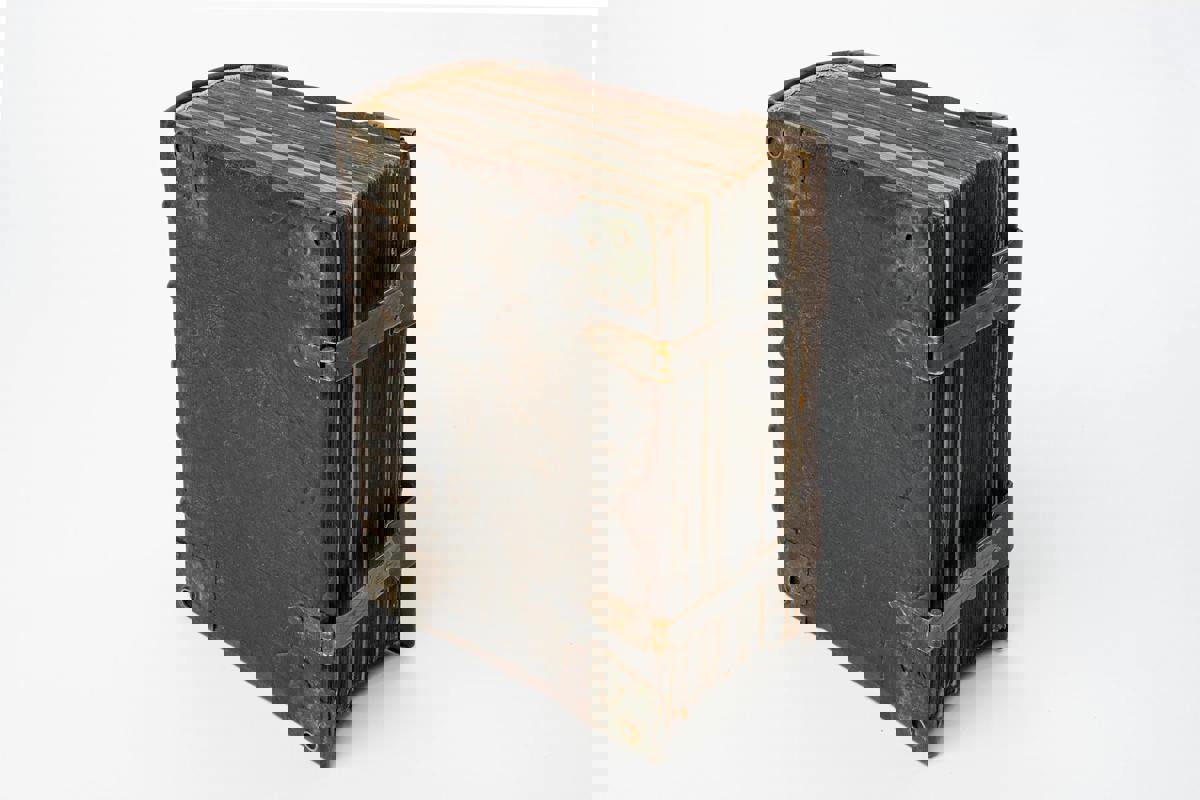
The literary world is abuzz following the recent discovery of a rare medieval manuscript tucked away in the back room of an unassuming antique bookstore. The find, described by experts as 'remarkable', has sent shockwaves through both academic and collector circles, with individuals flocking to the store to glimpse the artefact. The emergence of the manuscript is being hailed as one of the most significant literary finds in recent history.
The owner of the bookstore, Margaret Hewson, recounted the serendipitous moment of discovery. While cataloguing a batch of unsorted donations, she stumbled upon the tattered volume, its intricate binding catching her eye amid the dusty tomes. 'I couldn't believe what I was seeing,' Hewson said. 'There was something about the parchment and the illuminated text that immediately struck me as special.'
Upon further examination, the manuscript was found to be a previously unknown work, believed to date back to the late 14th century. Initial assessments by scholars suggest it is a narrative poem possibly penned by a scribe connected to Geoffrey Chaucer. The language and script point to Middle English, and the content reveals themes of courtly love, religious devotion, and social commentary reflective of the medieval era.
Dr. Philip Ashton, a medievalist at the University of Oxford, was among the first academic experts to review the manuscript. 'The provenance and condition are exceptional,' Ashton remarked. He noted that the style of illumination, featuring vibrant gold leaf and intricate marginalia, suggests it was commissioned for a wealthy patron. Ashton added, 'Such finds can change our understanding of literary networks in medieval England.'
Literary tourists have descended upon the bookstore, eager to witness the manuscript firsthand. Visitors from across the UK and even mainland Europe have queued for a glimpse, drawn by the blend of mystery and history. Local hotels and cafes have reported a surge in business, with many welcoming the influx of scholars, collectors, and curious readers eager to participate in the unfolding story of the forgotten text.
Sophia Green, a postgraduate student in medieval studies, travelled over two hundred miles to see the manuscript. 'It's an invaluable opportunity to see history up close,' she shared. 'Most rely on digital facsimiles or museum displays, but experiencing the actual pages delivers a sense of intimacy with the past that's difficult to describe.' Like many others, Green hopes the manuscript will soon be made accessible to broader audiences.
Collectors, too, have shown heightened interest, sparking speculation about the manuscript's potential market value. While the exact worth remains undetermined, early appraisals estimate the artefact could fetch upwards of £500,000 at auction, given its uniqueness and pristine state. However, calls for its preservation in a public institution have grown, with some urging that it be kept accessible for educational and research purposes rather than locked away in a private collection.
Historians are particularly fascinated by marginal notes found alongside the primary text. These annotations, written in a different hand and apparently added decades after the original inscription, may offer insights into the manuscript’s journey through history. Such palimpsests act as breadcrumbs, revealing how texts were read, interpreted, and valued by generations of owners.
The local council has discussed the possibility of hosting a temporary exhibition, inviting experts to present lectures on the manuscript’s historical and literary significance. Plans include public readings, workshops on manuscript conservation, and presentations about the era from which the text originates. Local schools are especially interested, anticipating immersive educational opportunities for students to engage with primary historical sources.
Already, digital humanities specialists are working to create a high-resolution, interactive facsimile of the manuscript. This digital version would allow global audiences to study the artefact in detail, with features enabling viewers to zoom in on illumination and decipher the archaic script. 'Accessibility is essential,' said Dr. Imran Patel, project leader. 'We want both scholars and the public to benefit from this discovery.'
The discovery has also prompted renewed debates among experts regarding the ongoing importance of independent bookstores and small antiquarian shops. Many argue these businesses serve as vital custodians of neglected cultural treasures that might otherwise remain hidden. Hewson agrees, saying, 'This find underscores the value of supporting local bookshops, where history and mystery often sit side by side.'
For literary communities, the excitement surrounding the manuscript has reawakened interest in medieval studies, a discipline that often struggles for visibility and funding. Universities report increased inquiries about related courses, while online forums for enthusiasts and amateur paleographers have seen a spike in activity. The story has inspired several local book clubs to hold readings of Middle English poetry, deepening communal engagement with the period.
Amid the fervour, questions remain about the manuscript’s origin and the scribe’s identity. While handwriting analysis offers clues, definitive attribution may take months or years of collaborative research, drawing on paleography, codicology, and even chemical testing of inks. Such work exemplifies interdisciplinary scholarship at its best, blending the efforts of historians, linguists, chemists, and art historians in pursuit of answers to centuries-old puzzles now brought to light by a simple bookstore find.